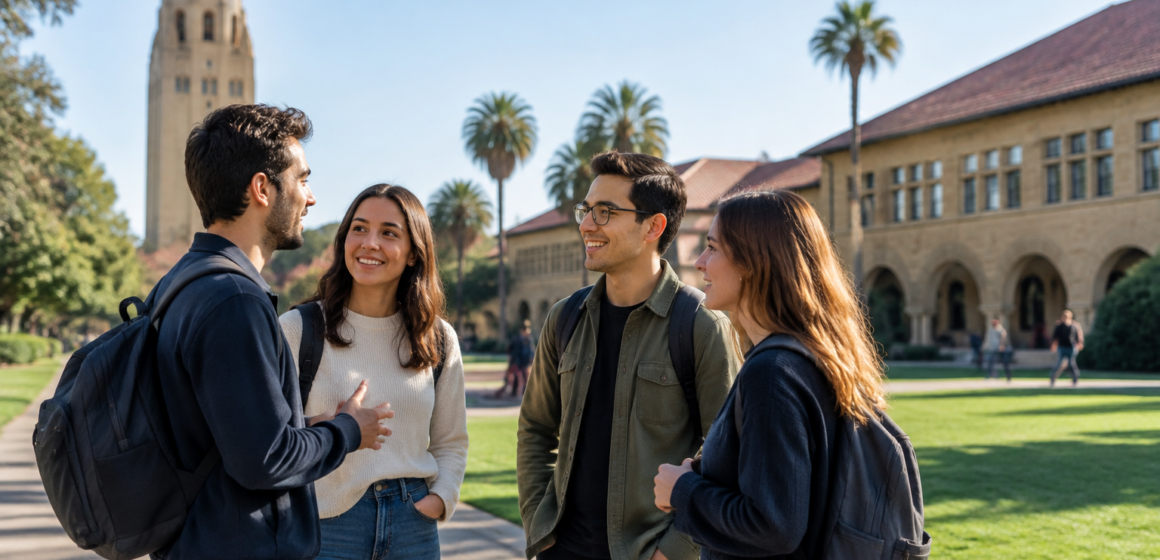
The Silicon Valley Turks in AI Summit is scheduled to bring Turkish artificial-intelligence researchers, founders, investors, professionals, and students to Stanford Faculty Club on Saturday, October 31, 2026. The official registration page now marks the gathering sold out and offers a waitlist, making admission availability the immediate practical issue for prospective attendees. The announced subjects span research frontiers, entrepreneurship, investment, and networking, with Turkish identified as the program language. The event remains an upcoming gathering: its participant announcements describe planned appearances, not completed presentations or discussions, and the registration page should not be interpreted as offering unrestricted admission simply because ticket categories remain visible.
Announcements from Turkish Students Association Global and Global Turks AI Lab place the program between 10 a.m. and 9 p.m. and promote an expected gathering of more than 300 people. That number is an organizer projection, not a verified attendance total. Both organizations identify the same summit, date, Stanford setting, and registration link, reinforcing that their announcements concern the event listed by TSA Global on Luma. Their descriptions also explain the intended audience: established professionals and people entering the field are being invited into the same community forum, rather than separate gatherings organized around one employer, university department, or commercial product.
A Community Gathering With Student Organizers
The official event description credits Global Turks AI, TSA Global, UC Berkeley TSA, and Stanford students and alumni with bringing the gathering together. The organizers’ separate announcements use the fuller name Global Turks AI Lab and also refer to Stanford academics. Together, those descriptions establish a coalition of professional and student communities behind the summit. They do not establish Stanford University itself as the institutional organizer. That distinction matters when describing an event held on a university campus: the Faculty Club is the announced venue, while the organizing credit belongs to the groups and Stanford-affiliated individuals identified in the event materials.
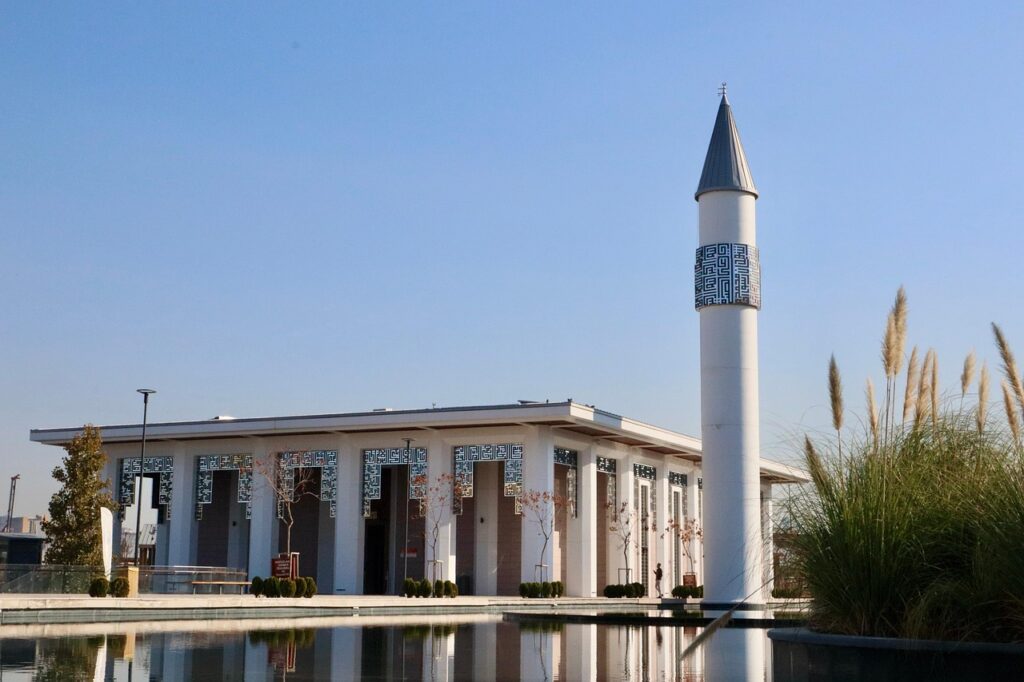
The celebration of Cumhuriyet Bayramı, or Republic Day, supplies the gathering’s community context. The Luma description explicitly connects the summit with that celebration, while the professional subjects give the day a separate focus on AI work and company-building. The combination is significant to the event’s stated identity: participants are being brought together through both a shared Turkish connection and professional interests that cross institutional boundaries. This is not an announcement of a national technology policy, a university research initiative, or a new industry association. It is a planned professional gathering whose organizers are using a community celebration as an occasion for technical exchange and introductions.
Student involvement is part of the organizing structure, not merely an audience category. The official description places university student communities alongside the professional network, while also naming students among the people the summit is intended to serve. That arrangement gives the event a cross-career-stage character without establishing a formal mentoring or recruitment program. A student may attend with different questions from a founder or an investor, but the announced structure puts those interests within one gathering. Any stronger claim—that the summit guarantees access to a mentor, a job interview, or an investment decision—would go beyond what the event materials establish. Its supported purpose is connection and exchange.
Research, Company-Building, and Investment
The announced participants include Ekin Doğuş Çubuk, Cengiz Pehlevan, Aydın Şenkut, and Didem Ün Ateş. Global Turks AI Lab’s announcement associates them with Periodic Labs, Harvard, Felicis, and LotusAI, respectively. Those affiliations help explain the range of institutions represented in the planned gathering without requiring assumptions about individual presentation topics. A participant list is not the same thing as a detailed agenda: it does not, by itself, establish who will deliver a keynote, which people will share a panel, or how much time any speaker will receive. The reliable description is that these individuals have been announced as participants in a summit spanning research and commercial perspectives.
The primary listing describes panels and networking across AI research frontiers, entrepreneurship, and investment. Read together, those subjects establish a broad professional scope rather than a narrowly defined technical conference. Research questions, the experience of building a company, and the assessment of investment opportunities are distinct topics, even when the people discussing them work within the same industry. The organizers have not supplied a complete session-by-session program in the accessible event description. It would therefore be premature to assign particular arguments, forecasts, research findings, or investment recommendations to the named participants. The announcement establishes the subjects to be explored, not the conclusions that future conversations will reach.
Supporter Maxitech adds a more concrete description of the planned format. In its own announcement, the company says the summit will include founders demonstrating startups to investors, engineers sharing their work, and a venture-capital panel in which Maxitech expects to participate. This adds useful detail to the primary listing’s broad subject headings, while remaining a sponsor’s advance account rather than a final timetable. Demonstrations and investor discussion would give the entrepreneurship theme a practical setting, but they should not be reported as completed pitches or financing outcomes. Maxitech’s statement supports describing these activities as planned elements of the gathering, not as evidence that any startup has secured backing.
Supporters and the Limits of the Announcement
The official event page thanks fal.ai, AI Startup Factory, Bek Ventures, Maxitech, Borusan Ventures, and Türk Telekom Ventures as supporters. Maxitech separately confirms its sponsorship, providing direct corroboration of its own involvement. The supporter list helps identify the organizations associated with making the event possible, but it does not explain the financial value or terms of their contributions. Nor does a support credit establish that each organization will operate a recruiting booth, evaluate startups, or offer services to attendees. The clearest account preserves the distinction among organizing an event, supporting it, appearing on its program, and making a separate commercial commitment. Those roles should not be treated as interchangeable.
The same caution applies to the summit’s prospective benefits. Networking is an announced part of the program, but a conversation is not a promised partnership, and an introduction is not a funding agreement. The research, entrepreneurship, and investment themes describe opportunities for professional exchange rather than guaranteed outcomes for people who attend. This distinction is especially important in advance coverage, when the temptation is to describe the possibilities of a gathering as though they have already been realized. The supported news is that organizers have assembled a planned forum across these professional interests. Any resulting collaborations, business relationships, or career developments would require separate evidence after they occur.
The source base also sets limits on how precisely the day can be described. The accepted announcements provide an overall schedule, participant names, broad subjects, and some proposed activities, but not a comprehensive running order. They do not justify reconstructing individual sessions or attributing unannounced presentation titles to speakers. For someone deciding whether the summit fits their interests, the strongest available picture is therefore thematic: AI research, startup experience, investment discussion, and community networking. More detailed questions about the sequence of sessions or a particular participant’s appearance should be directed to the organizer rather than answered through inference from the participant list. The official page includes a Contact the Host function.
Waitlist, Venue, and Registration Details
The venue description identifies Stanford Faculty Club and specifies the Cedar Room and Main Patio as the event spaces. That is more specific than the general Stanford University location label also displayed on the registration page. Prospective attendees should retain those named spaces when seeking arrival instructions, rather than assuming the university-wide location label identifies an entrance or check-in point. The program language is listed as Turkish, another material planning detail for anyone considering attendance. Neither the venue name nor the use of campus rooms changes the stated organizing structure. The gathering is presented as a collaboration among the named communities and Stanford-affiliated individuals, held in the announced Faculty Club setting.
Admission requires particular care because the registration page combines a sold-out notice, a waitlist, ticket categories marked as requiring approval, and a separate donation option. The Turkish Students Support option explicitly does not include an event ticket. A donation should therefore not be treated as an alternative way to obtain admission, and joining the waitlist should not be treated as confirmation of a place. The approval labels also mean that selecting a category is not, on its own, evidence of accepted registration. Anyone considering travel should first establish their individual admission status with the organizer rather than relying on the continued appearance of ticket choices on the page.
The organizer also states that registration contact information will be added to a mailing list, with an unsubscribe option. That disclosure is part of the registration decision alongside admission status and program language. For unresolved practical questions, the official listing’s host-contact function is the direct route to the people managing the event. With October 31 still ahead, the story is an announced Turkish AI gathering with a broad professional scope and constrained admission—not a report of its eventual results. The primary listing remains the reference point for the waitlist, while the organizing groups’ announcements and Maxitech’s statement add context about the intended audience, hours, and planned activities.
Original source: Read the original article.
Source credit: This news brief is based on reporting from TSA Global / Luma.
Original headline: Silicon Valley Turks in AI Summit
Additional sources and references:
- Celebrating 103 years of the Turkish Republic by bringing together the people shaping what comes next. — Turkish Students Association Global
- We are celebrating Cumhuriyet Bayramı (Republic Day) together with Turkish AI diaspora. — Global Turks AI Lab
- Maxitech sponsors Silicon Valley Turks in AI Summit at Stanford — Maxitech
Featured image credit: Image created for ATIIC.