NASA Heads to Antalya Space Congress With Exploration and Science Agenda
NASA is preparing to bring an extensive exploration and science agenda to the 77th International Astronautical Congress in Antalya, Türkiye, from October 5 through October 9, 2026. Deputy Administrator Matt Anderson will lead the American agency’s delegation, which is scheduled to participate in plenaries, technical discussions and media engagements. NASA published its advisory September 29 and expanded it September 30 to include additional activities. With the congress opening Monday, the announcement provides a concrete picture of what NASA intends to discuss in Türkiye: lunar exploration, scientific investigations, international cooperation and commercial participation. It is a participation announcement, however, rather than a declaration of a new American–Turkish mission or research agreement.
For Turkish Americans following scientific connections between the two countries, the significance lies in that distinction. The gathering places NASA’s representatives within an international forum hosted by Türkiye, offering a setting for exchanges without establishing their eventual results. NASA identifies American leadership in exploration toward the Moon and Mars, responsible exploration under the Artemis Accords, science and support for the commercial space sector as priorities. Those subjects provide several ways to follow the meeting beyond a single headline. The most useful questions will concern what participants actually present, what evidence accompanies their claims and whether any subsequent announcement establishes commitments beyond the discussions already scheduled.
Türkiye’s First International Astronautical Congress
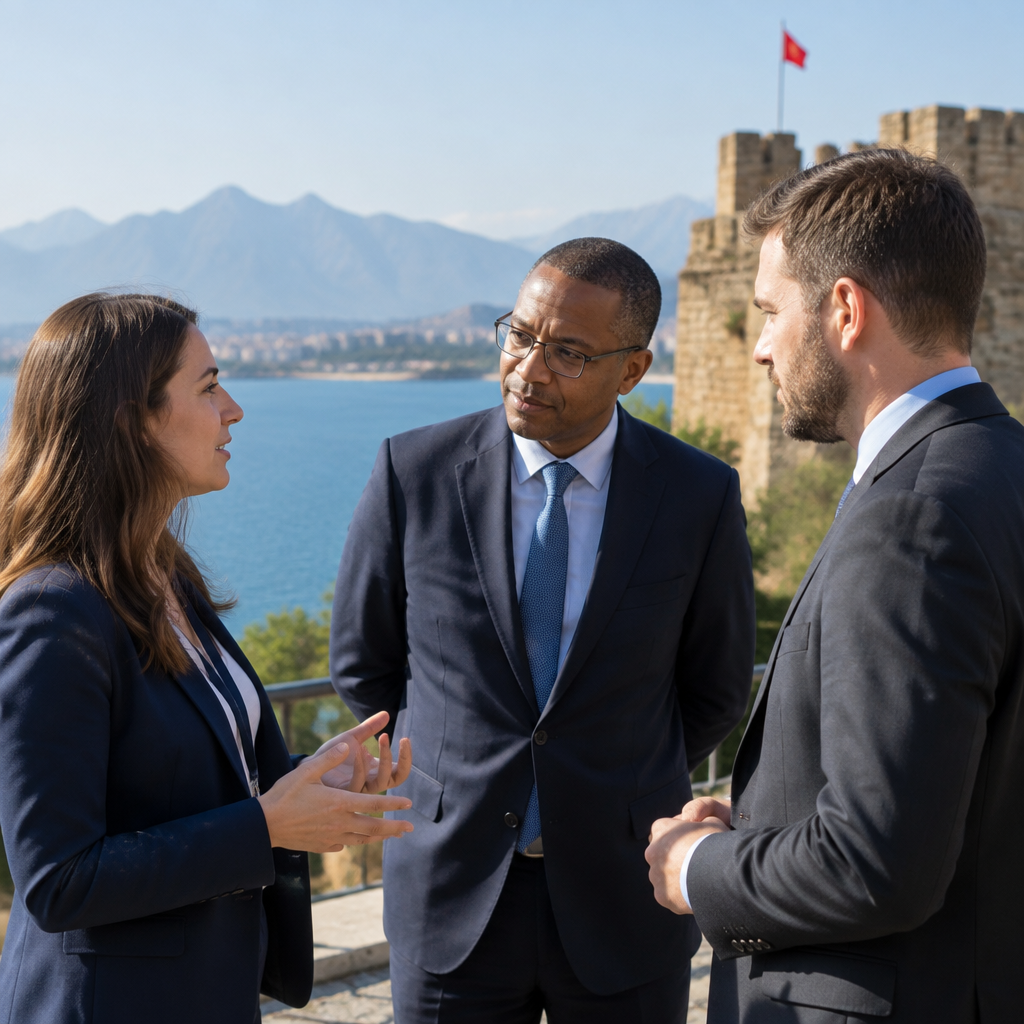
The International Astronautical Federation identifies Antalya’s congress as the first edition hosted in Türkiye. Its event description names the Turkish Space Agency, known as TUA, as host and the SAHA Istanbul Aerospace Cluster as co-host. TUA’s own announcement adds that the gathering is being coordinated by Türkiye’s Ministry of Industry and Technology and will take place at the Antalya NEST Congress Center. These descriptions establish complementary responsibilities rather than competing accounts: the federation organizes the international congress, while Turkish institutions provide the host framework. For readers evaluating the American–Turkish connection, that structure matters. NASA is an announced participant in a wider international gathering, not the organizer of a separate bilateral conference.
TUA connects hosting the congress to two National Space Program objectives: increasing space awareness and developing the space ecosystem. Its description emphasizes bringing together Türkiye’s space stakeholders and maximizing scientific, technological and economic benefits. The agency also describes the federation as an organization established in 1951, with 604 members across 82 countries, including agencies, businesses, universities and research institutions. Those are federation membership figures, not a count of national delegations attending Antalya. Together, the descriptions explain why the host regards the congress as more than a sequence of speeches. Its stated ambition encompasses public understanding, institutional connections and opportunities to present capabilities, although achieving those goals will require outcomes that can be assessed after the gathering.
Artemis Discussions Put Missions and Science Together
NASA’s Monday agenda gives lunar exploration a prominent place. Jeremy Parsons, the agency’s Artemis program manager, is scheduled to present lessons learned from the Artemis II test flight. Other announced presentations address environmental challenges and infrastructure needs at the lunar south pole, the Human Landing System’s effort to demonstrate the capability to land Artemis astronauts by 2028, and an Artemis-era science strategy. The subjects should be read as separate parts of the announced program, not compressed into a claim that a landing is imminent or already accomplished. A presentation about lessons learned concerns experience from a flight; a capability discussion concerns development goals; and a science strategy concerns the investigations exploration is intended to support.
The schedule continues that discussion Tuesday with an industry-perspective session on Artemis II mission results featuring Parsons. Wednesday’s program includes a preliminary Artemis II lunar science release featuring Anderson, Science Mission Directorate Associate Administrator Nicky Fox, Human Spaceflight Mission Directorate Associate Administrator Lori Glaze and Artemis II lunar science lead Kelsey Young. The advisory announces the session but does not disclose the findings it will present. That boundary is important for anyone following from the United States: the planned release is something to watch, not evidence for a scientific conclusion before the material becomes available. Comparing the operational and scientific presentations may help readers distinguish what a mission demonstrated from what investigators learned through its observations.
International engagement also has a specific place on NASA’s calendar. On Wednesday, October 7, the agency lists an Artemis Accords news conference involving Anderson and Major General Roberto Melgar Sheen, director of the Peruvian Space Agency, CONIDA. The named participants make this an international activity occurring at the Antalya congress, but they do not establish a Turkish announcement about the accords. Türkiye’s role as host should not be substituted for the identity of the participants NASA actually lists. For a Turkish American audience, the useful approach is to follow both dimensions independently: the congress creates the setting for international engagement, while the substance and parties of any particular announcement must be established by that announcement itself.
A Science Program Extending Beyond Lunar Exploration
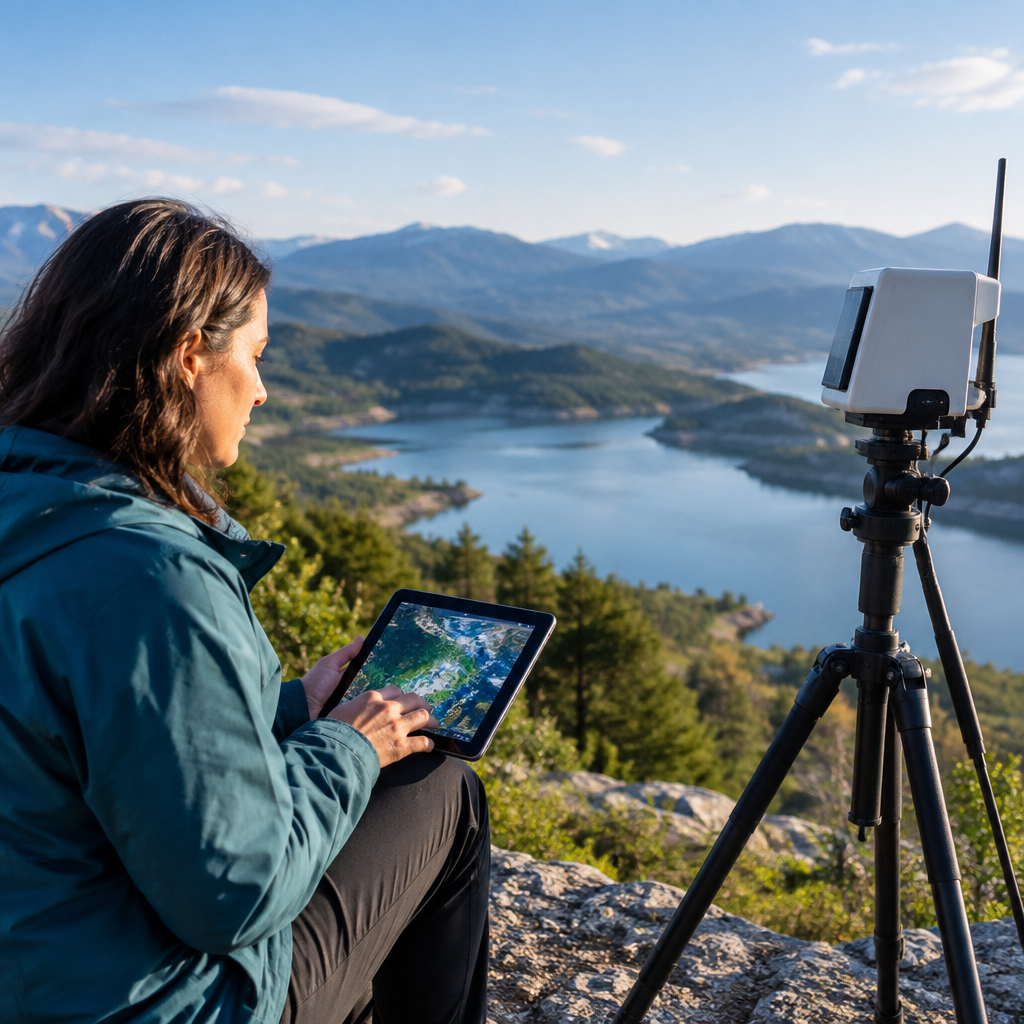
Earth observation and heliophysics are also represented in NASA’s Monday schedule. Earth Science Division Director Karen St. Germain is listed as a keynote speaker for a session on accelerating Earth observation cooperation through international and commercial fleets and more rapid mission development. Heliophysics Division Director Joe Westlake is scheduled to discuss using small satellites within an architecturally diverse fleet. These announced topics broaden the story beyond human spaceflight. They invite attention to how missions are organized and how different participants might contribute observations. The advisory does not announce a new Turkish satellite partnership through either session. Rather, it identifies the subjects NASA intends to bring into the congress’s technical exchange, where the details of any proposal will matter more than its broad label.
Wednesday’s activities extend from observations to applications and software. St. Germain is scheduled for a session addressing the challenge of moving from observation to decision. Steve Chien, a technical fellow and senior research scientist in the Artificial Intelligence Group at NASA’s Jet Propulsion Laboratory, is listed for a presentation titled “Trusted AI on Mars.” These are distinct discussions, and the announcement does not describe a new shared project linking them. For students and technically interested readers, their titles suggest useful questions to take into the presentations: What decision is being supported? What evidence makes a system trustworthy? What limitations are acknowledged? Those questions offer a more precise way to follow the program than treating artificial intelligence or satellite data as self-explanatory solutions.
NASA also lists Wednesday’s space-manufacturing discussion featuring Fathi Karouia, a senior research scientist associated with the Blue Marble Space Institute of Science and the exobiology branch at Ames Research Center. Its announced scope includes biotechnology, advanced materials and human exploration. On Thursday, Biological and Physical Sciences Division Director Lisa Carnell is scheduled to discuss organ-chip research in space and precision health. The advisory establishes these subjects as part of NASA’s congress participation; it does not provide experimental results or demonstrate a new treatment. Readers should therefore distinguish a research presentation from a validated practical outcome. That distinction allows interest in potentially consequential work without making claims about benefits that the participation announcement itself does not substantiate.
Following the Congress and Understanding Access
The federation frames this year’s congress around the theme “The World Needs More Space,” emphasizing secure, accessible and collaborative activity, peaceful use, and sustainable and equitable exploration. Those are the organizer’s stated aspirations, not findings about what the meeting has achieved. NASA’s public-facing participation includes an exhibit in Hall 1 at NEST Convention Centre and an October 9 appearance there by astronaut Chris Williams discussing life as an astronaut. For readers interested in scientific connections between the United States and Türkiye, the combination offers both a policy framework and a more approachable entry point. Neither should be mistaken for a dedicated Turkish American program: the sources describe participation within the wider congress.

For prospective attendees, the official registration page distinguishes delegates, retirees, young professionals, full-time students and teachers. It requires supporting documentation for the latter categories, defines young professionals as under 35, and limits the teacher category to primary- and secondary-level educators rather than university professors. The listed principal registration packages include access to plenaries, scientific and technical sessions, and the exhibition. Accompanying-person admission does not include technical or Global Networking Forum sessions. These distinctions make category selection consequential: a family member’s access is not equivalent to a technical participant’s access. The page also states that fees include 20 percent VAT and that registration requires full payment in euros, so applicants should consult the current terms rather than assume every badge provides the same experience.
Travel is not the only way to follow the announced activities. NASA directs viewers to the International Astronautical Federation’s YouTube channel for select events, while its advisory points registered media to the congress agenda. “Select” is an important qualification: the announcement does not promise public streaming of every presentation or unrestricted access to all materials. As the October 5–9 gathering unfolds, the strongest measure of its American–Turkish significance will be the substance made public, not an assumption that attendance automatically produces cooperation. For now, the verified development is clear: NASA has announced a broad delegation program for Türkiye’s first International Astronautical Congress, creating a defined opportunity to follow exploration, science and international engagement in the same setting.
Original source: Read the original article.
Source credit: This news brief is based on reporting from NASA.
Original headline: NASA Features Exploration, Science at International Space Conference
Original author: Lauren E. Low
Original publication date: 2026-09-29
Additional sources and references:
- IAC 2026 Antalya — Turkish Space Agency
- 77th International Astronautical Congress (IAC 2026) — International Astronautical Federation
- Registration — IAC 2026 Official Congress Website
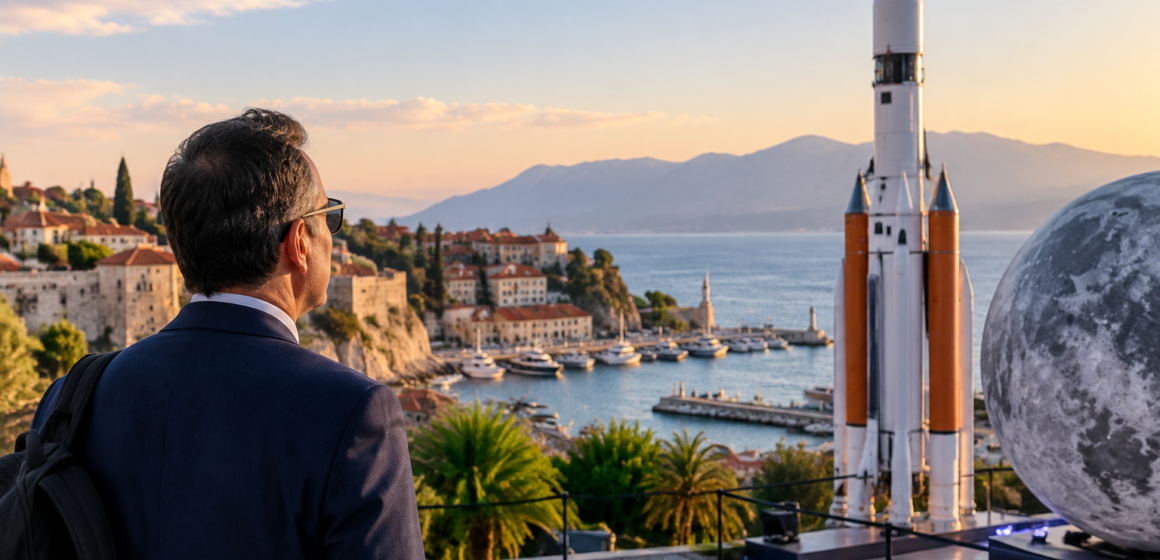
Featured image credit: Image created for ATIIC.