
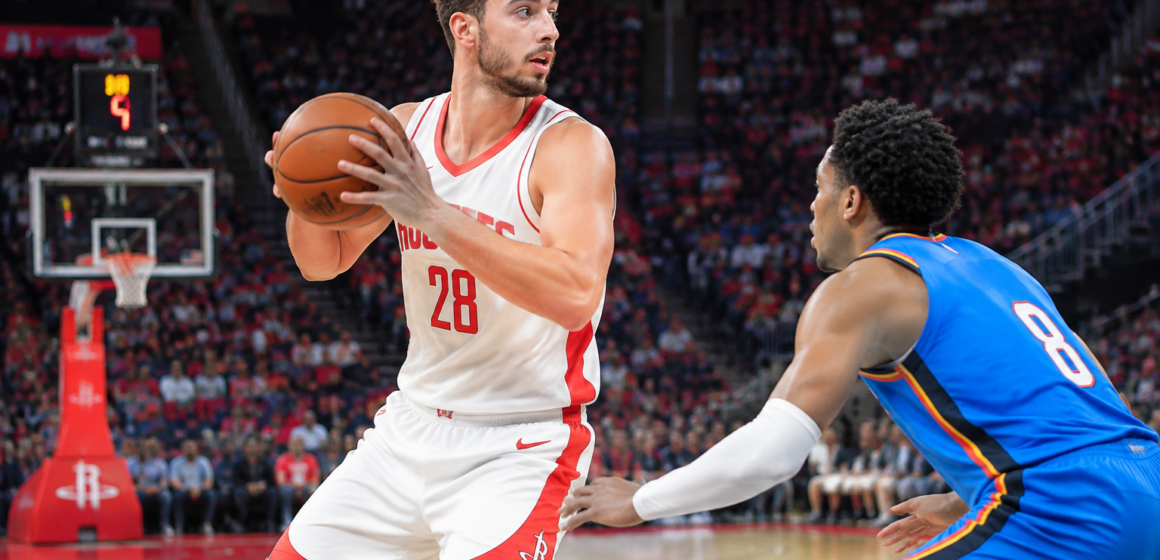
Alperen Şengün Delivers All-Around Finale as Rockets Beat Thunder 116-89
Alperen Şengün gave the Houston Rockets a productive final preseason appearance, contributing at both ends of the floor in a 116-89 victory over the Oklahoma City Thunder at Toyota Center on Thursday, October 15, 2026. His 14 points, seven rebounds and two blocks were among the performances highlighted by Sportsnet, alongside Fred VanVleet’s distribution and Bogdan Bogdanović’s scoring off the bench. Houston Press confirmed the home victory, which closed Houston’s exhibition schedule. The Rockets finished with a comfortable margin, but the game also featured a second-quarter Thunder response before Houston pulled away after halftime.
Şengün’s complete line showed how much he contributed beyond finishing possessions. According to RotoWire, he recorded five assists and one steal in addition to his scoring, rebounding and shot-blocking across 24 minutes. He finished second on the Rockets in points and assists while leading the team in rebounds and blocks. Those team rankings help explain why his appearance stood out without an especially large scoring total: he was involved in creating baskets, recovering missed shots and contesting Oklahoma City’s attempts. It was a varied performance within limited exhibition minutes rather than a night built around one statistical category.
Şengün’s Interior Efficiency and Thompson’s Supporting Work
The shooting breakdown puts Şengün’s offense in sharper focus. He made seven of 11 field-goal attempts but missed both of his three-pointers, RotoWire reported. Subtracting those perimeter attempts leaves seven makes on nine two-point shots, approximately 77.8% inside the arc. His overall field-goal percentage was approximately 63.6%. The distinction matters when assessing this particular outing: his efficient scoring came from two-point range, not from a successful perimeter night. Both parts belong in the account. He converted most of his interior opportunities while his two attempts to extend the defense beyond the three-point line did not fall.

Amen Thompson provided another broad contribution in the same starting group. RotoWire credited him with 12 points, five rebounds, four assists, one steal and one block in 22 minutes. He shot six of 13 overall and missed his only three-point attempt, meaning his scoring, like Şengün’s, came entirely inside the arc. Thompson was one of six Rockets to reach double figures and ranked third on the team in both rebounds and assists. His work gave Houston another player who could finish a possession without being confined to that task, with his passing and defensive statistics adding substance to the scoring line.
Houston’s opening advantage was substantial, though it did not remain untouched. The Rockets won the first quarter 33-15, establishing an 18-point lead before Oklahoma City answered with a 32-21 second period. Those quarter scores, recorded in RealGM’s box score, put Houston ahead 54-47 at halftime. The seven-point interval margin is a more useful description of the competitive situation at that stage than the eventual 27-point result. Oklahoma City had recovered 11 points of its first-quarter deficit, leaving Houston with further work to do after an opening period that initially suggested a much more one-sided evening.

Houston’s Reserves Extend the Advantage
The separation came again in the second half. Sofascore’s game report recorded a 25-22 third quarter for Houston, followed by a 37-20 fourth. Together, those periods gave the Rockets a 62-42 advantage after the break and turned their seven-point halftime lead into the final 27-point margin. The strongest finishing burst therefore came later than the initial run that established control. Houston did not simply protect an early cushion throughout the evening; it rebuilt that cushion after Oklahoma City’s response and then widened it considerably in the closing period, when the exhibition’s remaining minutes became increasingly comfortable for the home team.
Bogdanović supplied the most productive individual scoring performance for Houston, finishing with 15 points in 16 minutes off the bench. RotoWire reported that he made five of nine shots overall, including five of eight from three-point range, while adding six rebounds, an assist and a steal. All of his points consequently came from beyond the arc. That was a different route to production from Şengün’s interior finishing, giving the Rockets scoring from contrasting areas of the floor. His rebounding also ensured that the appearance amounted to more than a brief shooting burst, even though the five three-pointers were its most prominent feature.

Tari Eason added another efficient outing, scoring 12 points on five-of-seven shooting in 17 minutes. He made both of his three-point attempts and contributed three rebounds and one assist, according to RotoWire. Its report also singled out a stepback three over Isaiah Hartenstein as an example of his ballhandling and shot creation. That detail adds a useful distinction to the bench’s production: Eason’s perimeter contribution was not described solely as waiting for a teammate to create an open attempt. In this game, he also demonstrated an ability to generate a shot, although one exhibition cannot establish how large that responsibility will become.
Reed Sheppard gave Houston a third notable reserve contribution with 11 points, five rebounds, three assists and one steal in 16 minutes. He made four of nine field-goal attempts, including three of eight three-pointers, and did not commit a turnover, RotoWire reported. Eight of his nine shots came from outside the arc, making his shot selection particularly distinct from that of Şengün and Thompson. His appearance also combined shooting with ball security and supporting work on the boards. Rather than requiring a large number of interior scoring opportunities, Sheppard supplied perimeter volume while contributing in several other categories during his limited time on the floor.
Passing and Perimeter Volume Shape the Result
VanVleet’s performance illustrated why scoring alone would provide an incomplete account of Houston’s offense. Sportsnet highlighted his eight assists, while The Dream Shake reported that he paired those assists with no turnovers despite shooting three of 13 from the field. That contrast is important: his own attempts were inefficient, but his distribution did not bring a corresponding turnover cost. The Rockets could receive useful offensive organization from their primary point guard even on a poor shooting night. Viewed alongside Şengün’s passing and the reserves’ perimeter production, VanVleet’s line helps explain how the team’s successful possessions were not dependent on every prominent player shooting well.

The box score shows just how heavily Houston leaned on three-point attempts. The Rockets made 17 of 53 from long range, while Oklahoma City finished five of 36. Those totals translate to 51 points from three-pointers for Houston and 15 for the Thunder, a 36-point difference from that area alone. Houston’s approximately 32.1% conversion rate was not exceptional, but its combination of volume and more makes produced a sizable advantage. The numbers distinguish the two sides of the shooting story: the Rockets attempted substantially more threes, and Oklahoma City converted a much smaller share of the ones it took.
Possession management supplied another part of the explanation. Sofascore reported 34 Houston assists against 19 for Oklahoma City, along with eight Rockets turnovers compared with 17 for the Thunder. Houston also collected 13 steals to Oklahoma City’s three. Those figures give the result a broader foundation than three-point shooting alone: the Rockets created more assisted baskets while surrendering fewer possessions through mistakes. Şengün’s five assists and one steal fit into that wider pattern, but the team totals make clear that it was a collective contribution. Houston’s advantage involved both converting opportunities and avoiding the giveaways that can prevent an offense from getting a shot.

A Useful Finale With Regular-Season Questions Ahead
The Dream Shake’s Xian E identified quicker attacks and better floor spacing as encouraging features of Houston’s approach, rather than presenting the final score as the only takeaway. Those observations help frame how the Rockets generated offense, but the lineup context remains essential. Steven Adams did not play for Houston, and Oklahoma City was without Chet Holmgren and Jaylin Williams. The recap also described the fourth quarter as largely a meeting of deeper reserves. The closing margin therefore should not be treated as a direct measure of how the teams’ complete regular-season rotations compare, particularly given how much of Houston’s separation arrived late.
Houston completed the preseason at 2-1, while Oklahoma City finished 1-4, according to Ben DuBose’s Rockets Wire recap. Houston Press reported that the Rockets would begin their regular season at home against the Dallas Mavericks on Wednesday, October 21. The exhibition finale left Houston with several concrete positives to carry toward that opener: Şengün’s efficient interior scoring and varied contributions, Thompson’s supporting production, and a bench that supplied multiple sources of offense. Those were accomplishments within this game, not promises about the schedule ahead. For Şengün, the final rehearsal nevertheless provided a clear example of his value extending well beyond his 14 points.
Original source: Read the original article.
Source credit: This news brief is based on reporting from The Dream Shake.
Original headline: Rockets roll past Thunder in preseason final 116-89
Original author: Xian E
Original publication date: 2026-10-16
Additional sources and references:
- NBA Pre-Season Highlights: Rockets 116, Thunder 89 — Sportsnet
- Alperen Sengun News: Full stat line in preseason finale — RotoWire
- Rockets roll past the Thunder 116-89 — Houston Press
Featured image credit: Image created for ATIIC.