
An online conversation about technology that adapts to the body
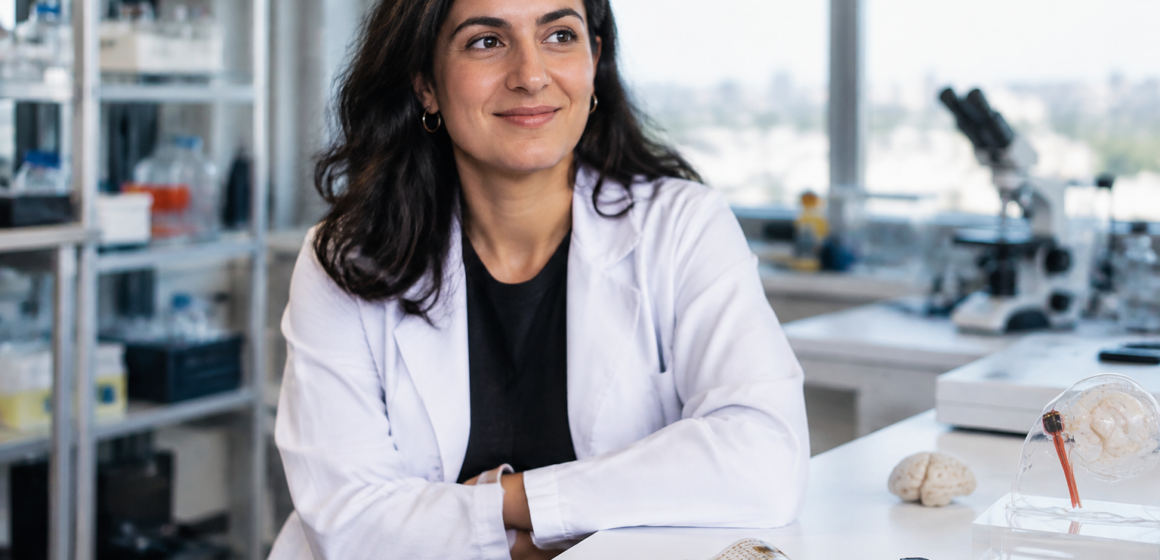
Canan Dağdeviren will be the featured speaker at an online MIT Alumni Forum on Thursday, October 15, 2026, from 4 to 5 p.m. Eastern time. The MIT Media Lab announcement identifies three subjects for the conversation: a wearable ultrasound patch intended for early detection of breast abnormalities, soft sensors for monitoring organs such as the bladder, and minimally invasive technologies that interact with the brain and other tissues. The event offers an opportunity to hear the researcher discuss these directions and answer questions about her work. Its immediate significance is educational: MIT is announcing a discussion of developing medical technologies, not the release of a consumer device or the availability of a new treatment.
The program is titled “Beyond the Wearable: Technology That Can Detect, Diagnose, and Treat Disease.” Its framing asks what could follow devices associated primarily with recording everyday activity and sleep. According to the Media Lab, Dağdeviren’s Conformable Decoders research group develops flexible and stretchable technologies that adapt to the human body. That description supplies the organizing idea for the forum: the relationship between an electronic device and the tissue it is designed to observe or influence. Rather than treating breast imaging, bladder monitoring, and brain-related technologies as unrelated inventions, the announcement brings them together around body-adaptive engineering. The session’s title presents an ambitious research direction; it should not be read as a claim that every technology mentioned already performs all three medical functions.

The MIT Alumni Association’s dedicated event page confirms the date, one-hour schedule, and online format. It also identifies David Rotman, editor at large at MIT Technology Review, as moderator. Registration is available through that organizer page, which is the most direct attendee-facing source for participation information. Because the announced venue is online, readers should not interpret MIT’s involvement as an invitation to arrive at a campus lecture hall. The practical task is to register and follow the organizer’s access instructions. The available listing establishes when the conversation is scheduled and who will lead it, but those details do not justify assumptions about the meeting platform, recording availability, or other arrangements that the accessible announcement does not explain.
The scientist behind the forum
Dağdeviren is an associate professor of media arts and sciences and directs the Conformable Decoders research group, the roles identified in the primary announcement. MIT’s official biography adds that she is tenured and serves as faculty lead for the Media Lab’s Women’s Health Program, WHx. She was born in Istanbul and earned her doctorate in materials science and engineering at the University of Illinois Urbana-Champaign. Those details provide a specific connection between Türkiye and American research institutions without requiring assumptions about citizenship or personal identity. For Turkish American readers, the forum offers a chance to follow the work of an Istanbul-born scientist whose university career developed in the United States. The event itself remains focused on her research rather than on a separate cultural or community program.
Her official biography describes doctoral work involving flexible energy harvesters, cardiac vessel stents, wearable blood-pressure sensors, and stretchable patches for measuring skin mechanics. Before joining MIT’s faculty, she was a Junior Fellow of the Harvard Society of Fellows and conducted postdoctoral research at MIT’s Koch Institute for Integrative Cancer Research. These are relevant background details because they help explain the combination of materials engineering and biomedical interfaces represented in the scheduled discussion. They do not establish the present clinical readiness of the forum’s featured technologies. A useful question for the conversation is how that earlier training informs decisions about where a device should sit, how it should accommodate tissue, and what information or action it should produce.
The institutional description of her laboratory emphasizes body-integrated technologies that turn physical patterns into signals, therapeutic action, or usable energy. Her biography also connects the wearable breast-ultrasound project to women’s health and says it was inspired partly by the loss of her aunt to breast cancer. That personal motivation gives context to one announced topic without making the forum a clinical consultation or a promise of improved outcomes. It suggests a useful distinction for listeners to keep in view: the problem motivating an invention, the engineering approach proposed to address it, and the evidence needed to judge its eventual usefulness are separate questions. The October 15 conversation can be approached as an opportunity to ask how the research moves among those questions.
Breast imaging, organ monitoring, and interaction with tissue
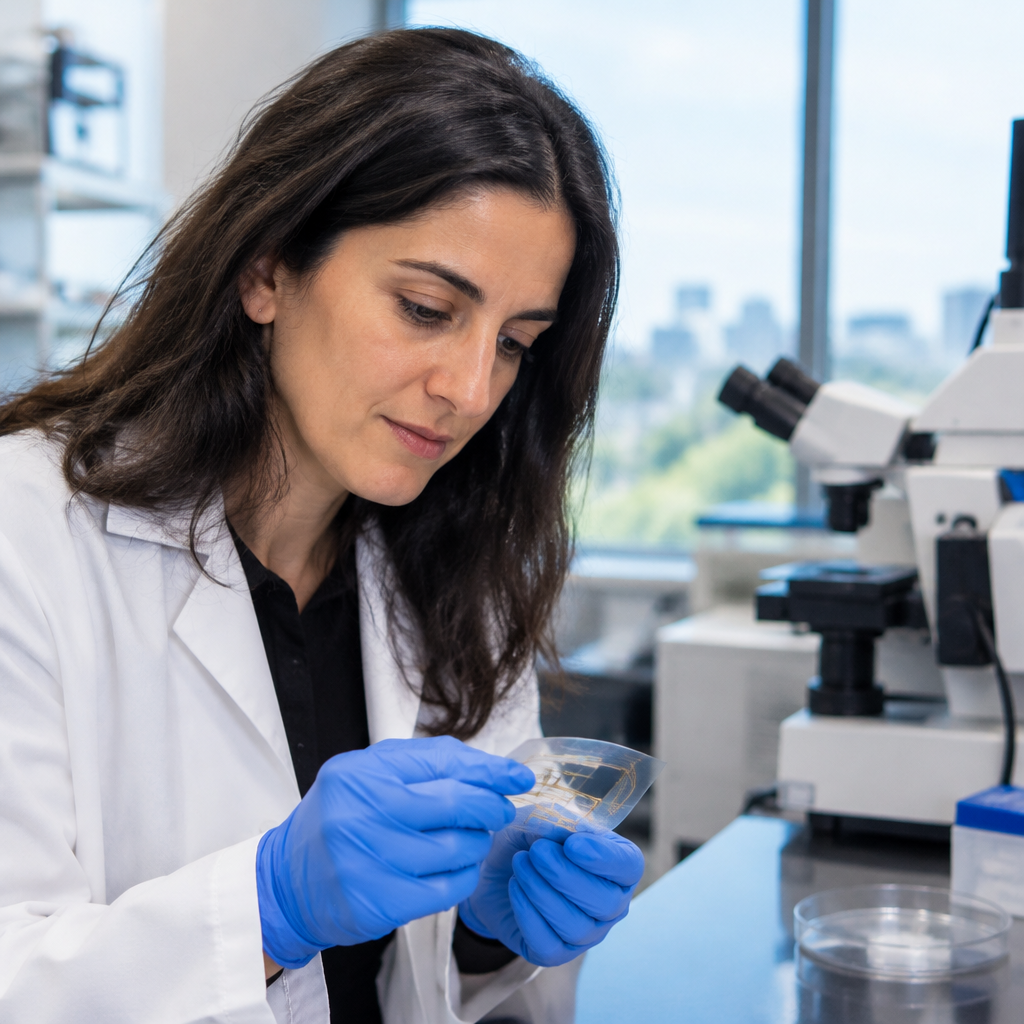
The breast-imaging topic is described carefully in the Media Lab announcement: a wearable ultrasound patch for early detection of breast abnormalities. That wording should remain narrower than an assertion that the device diagnoses cancer, replaces existing screening, or is available for home use. None of those conclusions follows from the event listing. For an audience interested in the project, useful questions would concern what the patch is intended to measure, how its results would be interpreted, and which uses remain research goals. Another would be how the team distinguishes obtaining an image from producing information that supports a medical decision. These are suggested questions arising from the announced topic, not a preview of answers Dağdeviren has already given or a claim about demonstrations planned for the session.
Bladder monitoring supplies a second announced example of technology designed around a particular part of the body. The primary source describes soft sensors that monitor organs such as the bladder, but it does not provide device specifications, patient-study results, or instructions for use. A responsible account of this forum therefore should not attach clinical performance figures to that brief description. Instead, the topic invites questions about what organ monitoring is meant to reveal and how a researcher decides which measurements would be useful. Listeners could also ask whether the same body-adaptive design principles transfer between organs or whether each application requires a substantially different approach. The announcement establishes bladder monitoring as part of the discussion, not as an independently functioning service that attendees can obtain afterward.

The third announced area involves minimally invasive technologies that interact with the brain and other tissues. Here, the language of interaction matters: the forum is not limited to devices that observe the body from its surface. At the same time, the announcement does not identify a particular treatment, clinical indication, or timetable for deployment. Readers should therefore resist translating the broad topic into a claim that a brain-related therapy is being launched. It offers a reason to ask how the group approaches technologies intended to influence tissue as well as collect information from it. Questions about intended function, research stage, and the distinction between experimental capability and a proposed medical application would help connect this part of the conversation to the detection and monitoring topics.
Participation and questions worth bringing
Taken together, the three scheduled subjects give attendees a way to compare research goals rather than simply collect a list of inventions. Breast imaging points toward identifying abnormalities; organ monitoring points toward following bodily information; tissue-interacting technologies introduce the possibility of action. This is an interpretation of the program’s structure, not a statement that the organizer has divided the hour into those categories. A productive question across all three would be what evidence the team considers necessary before describing a device as useful for a particular medical purpose. Another would ask which obstacles arise from the body-facing component and which arise from the surrounding system. The announcement’s emphasis on technologies that adapt to the body makes those questions relevant without supplying their answers in advance.

MIT describes the Alumni Forum as an online series connecting audiences with university experts and allowing questions about their research. Both the organizer’s event page and the Media Lab announcement present this session as an opportunity for engagement, not simply a posted research summary. Prospective attendees can use that format to seek explanations of unfamiliar terms and ask how the featured examples relate to one another. The official materials do not promise that every submitted question will be answered, and readers should not assume a particular question-submission process from the invitation alone. Registration is the appropriate next step for those interested in joining. The Alumni Association lists alumniforum@mit.edu as its contact, while the Media Lab announcement lists events-conformabledecoders@media.mit.edu.
The confirmed schedule remains Thursday, October 15, 2026, from 4 to 5 p.m. Eastern, online. In addition to the primary announcement and organizer page, Dağdeviren’s official MIT events listing carries the same forum and schedule. That agreement provides a clear basis for planning attendance. The strongest reason to join is the opportunity to hear a research leader explain how body-integrated engineering connects detection, monitoring, and potential treatment—and to ask where the possibilities stop and the unanswered questions begin. The published program supports that invitation, while leaving detailed technical claims for the conversation and its underlying research. Readers seeking participation information should consult official registration rather than treat the forum announcement as product information, medical guidance, or an offer of access to experimental technology.
Original source: Read the original article.
Source credit: This news brief is based on reporting from MIT Media Lab.
Original headline: Beyond the Wearable: MIT Alumni Forum with Canan Dagdeviren
Additional sources and references:
- Beyond the Wearable: Technology That Can Detect, Diagnose, and Treat Disease — MIT Alumni Association
- Overview ‹ Canan Dagdeviren — MIT Media Lab
- Events ‹ Canan Dagdeviren — MIT Media Lab
Featured image credit: Image created for ATIIC.