
Registration deadline comes before the October 18 opening
The Turkish American Cultural Association of Michigan, known as TACAM, is accepting registration for a new term of children’s Turkish classes beginning Sunday, October 18, 2026. The enrollment deadline is Thursday, October 15, 2026, according to the association’s dedicated announcement. The program is intended for children ages 6–12, with Sunday sessions scheduled from 9:30 to 11 a.m. In-person instruction will take place at the TACAM Cultural Center, 28847 Beck Road, Wixom, Michigan 48393. For prospective participants, the announcement sets out the central enrollment considerations: age eligibility, Sunday morning availability, the location of classroom sessions and the deadline for registering. Families should distinguish the registration cutoff from the first day of instruction, which follows three days later.
TACAM’s event-calendar search listing also identifies the same class announcement under October 2026, with an October 18 opening, the same 9:30–11 a.m. hours and the Wixom cultural-center location. That listing provides a second organizer publication supporting the opening arrangements, although it is not independent reporting. The dedicated event announcement remains the more complete source for the program’s tuition, teaching priorities and hybrid structure. The calendar listing should therefore be read as confirmation of the opening event rather than a substitute for the enrollment notice. For families reviewing the opportunity, the most useful distinction is between the basic event information repeated in the calendar and the more detailed commitments described on the registration announcement. Neither constitutes a published list of every instructional date.

The association says the program will provide 30 weeks of Turkish-language education during the 2026–2027 school year. It also says the complete academic calendar will be shared with registered families after the registration period is completed. This establishes the intended length of the course without identifying its final meeting date or the placement of every session. The opening announcement should not be used to calculate an end date by counting consecutive Sundays from October 18, because it does not provide the detailed calendar needed for that calculation. Families whose enrollment decision depends on particular dates can ask the organizer for clarification. What is publicly established is a continuing language program with a specified opening, weekly meeting window and planned duration, rather than a single introductory event.
A hybrid course centered on the Wixom cultural center
For the coming school year, TACAM plans a hybrid rotation consisting of three weeks of in-person classes followed by one week online. The arrangement belongs to the same children’s program and is not described as a separate remote course. Its practical significance is that families considering enrollment need to account for both forms of participation: attendance at the cultural center during classroom weeks and online participation during the remote week. The announcement does not present the course as exclusively in person or exclusively online. It instead describes an in-person emphasis combined with a recurring online component. The published rotation provides a useful outline of the format, while the full academic calendar will be needed to identify which individual Sundays fall into each category.

The Sunday timetable gives each listed session a 90-minute window, from 9:30 to 11 a.m. Together with the three-to-one rotation, that information helps parents assess how the program would fit into their weekly routine. It does not, however, establish that families may choose either format for any given meeting. The notice describes a planned sequence, not an unrestricted choice between classroom and remote attendance. Parents who require an alternative arrangement should ask TACAM whether one is available rather than assume the hybrid label guarantees that flexibility. Similarly, the public announcement does not identify the online platform or explain how access instructions will be distributed. Those operational questions remain separate from the format and meeting hours that the association has announced.
The physical setting is clearly identified as TACAM’s cultural center on Beck Road in Wixom. That address anchors the in-person portion of the program, but the published notice is not a complete first-day arrival guide. It does not describe classroom entrances, student drop-off or pickup procedures, or arrangements for an individual child’s participation needs. Those details can be raised with the organizer when a family is reviewing enrollment. The same distinction applies to the online portion: the announcement establishes that remote meetings are planned, but it does not supply a separate set of attendee instructions for them. Keeping location, format and arrival arrangements separate allows families to use the available information without mistaking the event listing for a comprehensive handbook covering every stage of attendance.
Speaking, listening and cultural connection shape the plan
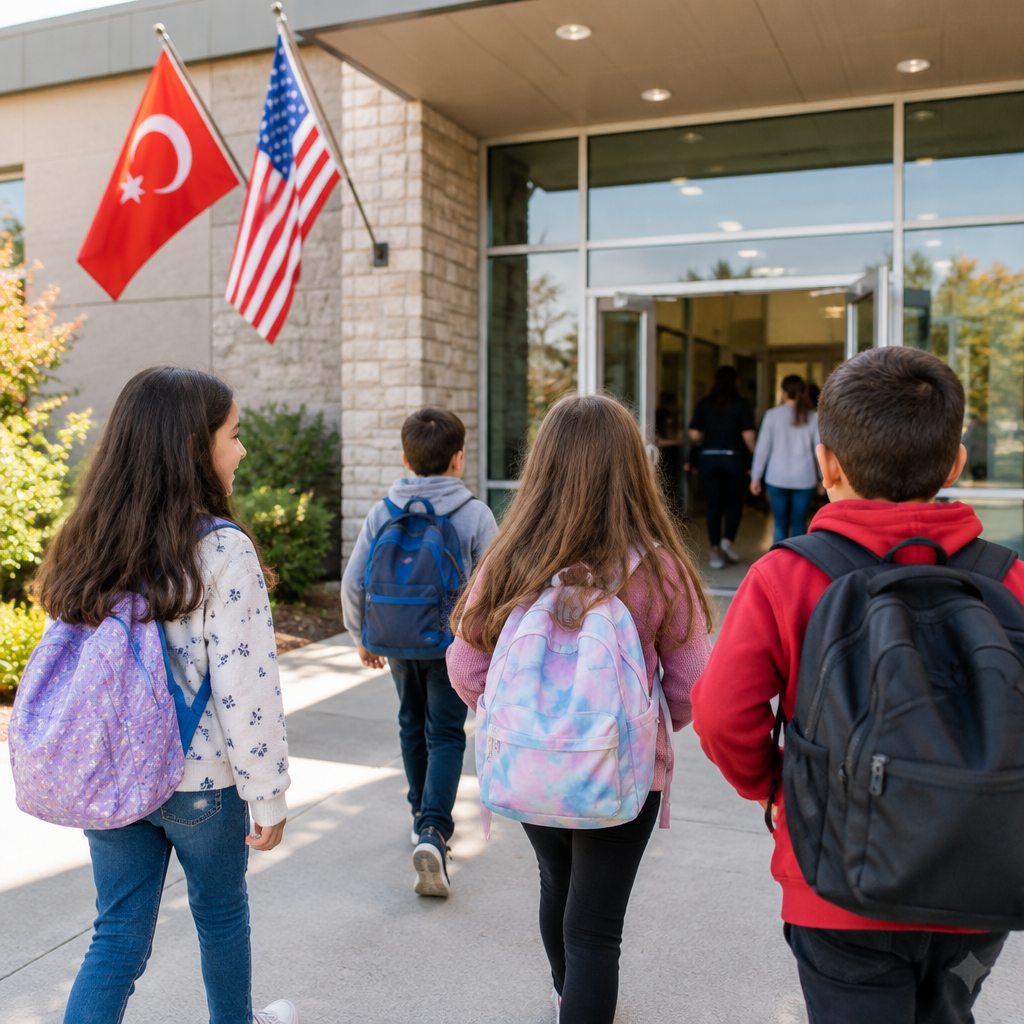
TACAM identifies speaking and listening comprehension as particular priorities for the new term. Its stated goal is to create a supportive setting in which children can understand, speak and use Turkish with confidence while learning about Turkish culture, traditions and everyday life. These are the organizer’s announced instructional aims, not independently measured outcomes. The notice does not promise a particular level of fluency or describe a qualification students will receive at the end of the course. For parents assessing whether the program suits their child, the emphasis on understanding and using the language is more informative than an assumed academic credential. Questions about reading, writing or other specific learning goals can be directed to the organizer without treating those subjects as confirmed components of an unpublished syllabus.
The association says lesson content and activities will be adapted to students’ language levels, needs and group dynamics. That approach recognizes that the enrolled children may not all begin with the same experience of Turkish, while leaving the details of classroom organization to the educational team. The announcement does not publish a placement procedure, entrance assessment or minimum proficiency requirement. Nor does it explain how the age range of 6–12 will be divided into teaching groups. Parents can use the stated commitment to adaptation as a starting point for discussing their child’s circumstances, but it should not be expanded into claims about procedures that TACAM has not announced. The supported description is a program intended to respond to its students, rather than a publicly documented sequence of fixed proficiency levels.

Language learning is also presented as a way to strengthen children’s connections with their families, heritage and Türkiye. TACAM links its teaching plans with cultural understanding and everyday communication, giving the course a purpose beyond the acquisition of vocabulary alone. That cultural dimension is an explicit part of the association’s explanation of why it offers the classes. It does not establish a separate calendar of cultural activities or identify particular celebrations, projects or classroom materials for this term. Families should therefore read the cultural goals alongside the more specific emphasis on speaking and listening, rather than infer a list of activities from them. The announcement describes what the educational committee intends to support; the experience and progress of individual children cannot be established before instruction begins.
Tuition, registration and questions for the organizer
Tuition is $240 for TACAM members and $300 for non-members, making the difference between the announced rates $60. The event page also expresses those amounts as $8 and $10 per lesson, respectively. Those per-lesson figures accompany the full program prices; they should not be interpreted as a published drop-in payment option. Both membership categories appear in the notice, allowing families to compare the stated tuition applicable to their circumstances. The announcement lists PayPal and Zelle as payment options, but it does not provide a complete account of payment policies, refunds or installment arrangements. Parents whose decision depends on those conditions should seek clarification before relying on an assumption. The confirmed financial information is the two tuition rates and the payment methods named by the organizer.

The dedicated event page provides a Google registration-form link and identifies mervesahin@tacam.org as the organizer contact. The linked form could not be retrieved during this research, so its questions and submission instructions have not been reviewed. Families should access the form through TACAM’s announcement and follow the requirements displayed there, rather than rely on an assumed checklist of information to submit. The contact address offers a direct route for questions about enrollment, the full calendar, payment and the planned online meetings. The notice identifies TACAM’s educational committee as the organizing team, connecting those practical questions to the program’s administrators. It does not establish that completing the form alone satisfies every enrollment step, so any uncertainty about confirmation or payment should be resolved with the organizer.
For Michigan families considering this term, the immediate timetable is registration by October 15, 2026, followed by the first class on October 18. The broader commitment is a planned 30-week program for children ages 6–12, meeting on Sunday mornings and combining three in-person weeks with one online week. TACAM’s announcement provides a clear starting point for evaluating that opportunity: the Wixom venue, the two tuition rates, the hybrid model and an instructional emphasis on speaking, listening and cultural connection. The complete academic calendar remains a later communication to registered families. Parents who need more detail before enrolling have both the official registration route and the organizer’s email address available. Those resources are the appropriate next step for resolving individual questions that the public announcement does not answer.
Original source: Read the original article.
Source credit: This news brief is based on reporting from Turkish American Cultural Association of Michigan (TACAM).
Original headline: 🔔 The First Bell Rings October 18 – TACAM Turkish Classes Registration Is Now Open!
Additional sources and references:
- Events — Turkish American Cultural Association of Michigan (TACAM)
- TACAM — Turkish American Cultural Association of Michigan — Turkish American Cultural Association of Michigan (TACAM)
Featured image credit: Image created for ATIIC.